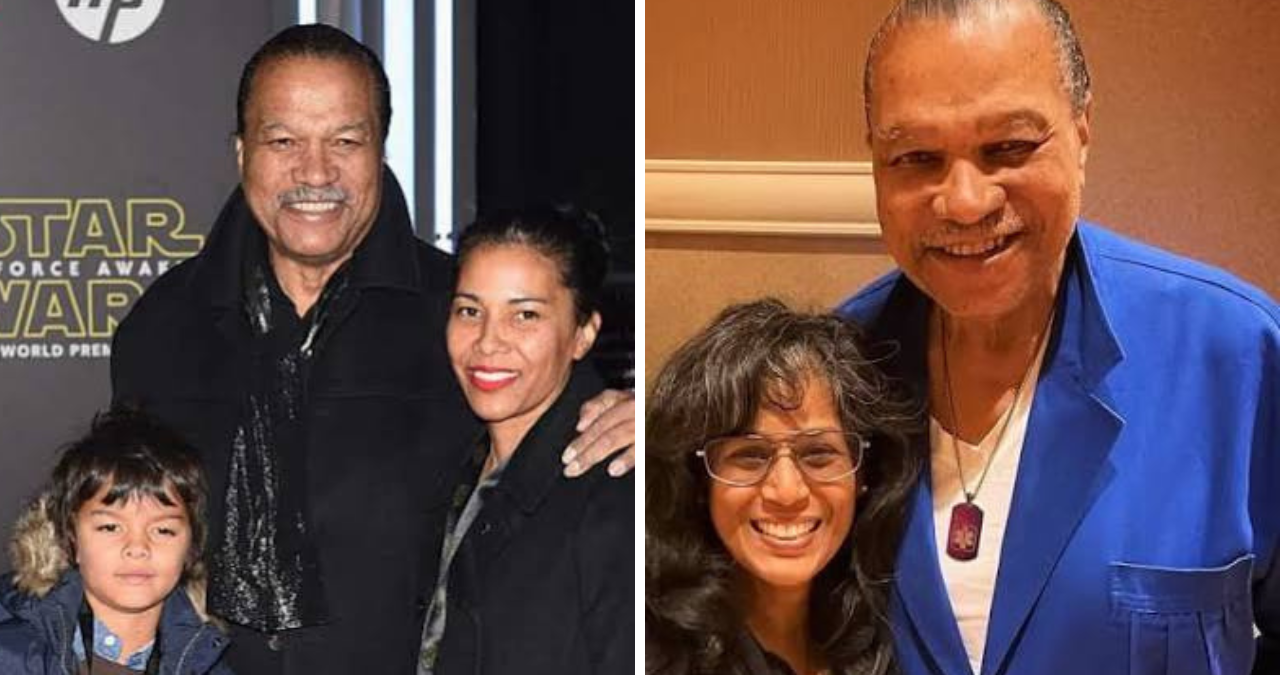
Teruko Nakagami is a Japanese-American woman best known for her long marriage to actor Billy Dee Williams and her earlier marriage to legendary jazz saxophonist and composer Wayne Shorter. Her life connects two influential worlds of American culture: the innovative jazz movement of the 1960s and the rise of Black Hollywood leading men during the 1970s and beyond.
Although Teruko Nakagami is often described as a celebrity spouse, her story is more complex than that label suggests. She was the mother of Wayne Shorter’s daughter, Miyako, and later became the wife of Billy Dee Williams, with whom she shares a daughter, Hanako Williams. She has remained notably private throughout her life, choosing to stay away from the constant publicity that surrounded both of her famous husbands.
Her biography is a story of family, cross-cultural identity, privacy, resilience, and quiet influence. She did not build a public career around fame, acting, or celebrity interviews. Instead, her importance lies in the personal and cultural legacy she shares with two major artistic figures.
Teruko Nakagami Quick Profile
| Detail | Information |
|---|---|
| Full name | Teruko Irene Nakagami |
| Also known as | Irene Nakagami |
| Nationality | Japanese-American |
| Known for | Wife of Billy Dee Williams and former wife of Wayne Shorter |
| First husband | Wayne Shorter |
| Second husband | Billy Dee Williams |
| Children | Miyako Shorter and Hanako Williams |
| Stepchild | Corey Dee Williams |
| Public image | Private family figure connected to jazz and Hollywood |
| Famous family connection | Mother of Billy Dee Williams’ daughter and Wayne Shorter’s daughter |
Who Is Teruko Nakagami?
Teruko Nakagami is widely recognized as the wife of veteran actor Billy Dee Williams. Williams is known for major roles in films and television series such as Brian’s Song, Lady Sings the Blues, Mahogany, The Empire Strikes Back, Return of the Jedi, Batman, and Star Wars: The Rise of Skywalker.
Before marrying Billy Dee Williams, Teruko was married to jazz musician Wayne Shorter. Shorter was one of the most influential composers and saxophonists in modern jazz. He worked with Art Blakey’s Jazz Messengers, Miles Davis, Herbie Hancock, and other major performers, while also co-founding the jazz fusion group Weather Report.
Teruko Nakagami’s life has therefore been connected to two influential men in American entertainment history. However, she has not attempted to become a public celebrity in her own right. She has mostly appeared in public as a family member at events, premieres, and special occasions.
Her low-profile lifestyle has contributed to the mystery surrounding her life. Many websites publish unverified claims about her age, net worth, education, profession, and early experiences. A careful biography should separate confirmed family details from claims that have been widely repeated without strong documentation.
Early Life and Japanese-American Background
Teruko Nakagami is commonly described as Japanese-American. Several online profiles report that she was born in Chicago, Illinois, and that her original name was Irene Nakagami. However, many details of her early life remain private.
There is limited reliable information about her parents, siblings, early education, childhood neighborhood, or professional activities before her marriages. Unlike public entertainers, politicians, authors, and business executives, Teruko has not shared a widely available official biography or conducted frequent interviews about her personal history.
Some reports say she had a twin sister and that her family experienced Japanese-American incarceration during World War II. These claims appear on celebrity biography websites, but direct public documentation confirming the details of her specific experience is not widely available. For that reason, those accounts should be approached with caution.
The broader history of Japanese Americans during the twentieth century remains important context. During World War II, many Japanese-American families were forcibly removed from their homes and incarcerated in camps by the United States government. The experience created lasting effects for generations of families, influencing identity, community life, economic opportunity, and relationships with American institutions.
Teruko Nakagami’s identity as a Japanese-American woman also carried significance during the decades in which she was linked to the jazz and film industries. Asian-American women had limited visibility in mainstream entertainment, and interracial marriages often received greater public scrutiny than they do today.
Teruko did not present herself publicly as an activist or spokesperson on these issues. Still, her personal life existed within a larger history of changing attitudes toward race, immigration, identity, and interracial family life in the United States.
Teruko Nakagami and Wayne Shorter
Before becoming Billy Dee Williams’ wife, Teruko Nakagami was married to Wayne Shorter. Shorter was a groundbreaking jazz saxophonist and composer whose work changed the direction of modern jazz.
Wayne Shorter met Teruko, also referred to in some biographical accounts as Irene Nakagami, during the early 1960s. They married in 1961 and later welcomed a daughter named Miyako. Their marriage ended after they separated in the mid-1960s.
This was an important period in Shorter’s professional development. He was becoming recognized as a musician with a powerful artistic voice. His work was marked by lyrical melodies, unusual chord changes, improvisational freedom, and complex emotional depth.
Shorter became known through his work with Art Blakey’s Jazz Messengers. He later joined the Miles Davis Quintet, one of the most influential groups in jazz history. In this setting, he performed alongside musicians including Miles Davis, Herbie Hancock, Ron Carter, and Tony Williams.
Teruko Nakagami was part of Wayne Shorter’s personal life at a formative point in his career. Although their marriage did not last, their connection continued through their daughter, Miyako.
Their family story became part of jazz history because Wayne Shorter wrote music inspired by Miyako. Two of his best-known compositions, “Miyako” and “Infant Eyes,” are associated with his daughter.
Miyako Shorter and “Infant Eyes”
Miyako Shorter is Teruko Nakagami’s daughter from her marriage to Wayne Shorter. Her name has a special place in the history of jazz because Wayne Shorter dedicated compositions to her.
“Infant Eyes” is one of Wayne Shorter’s most admired works. It has been performed and recorded by musicians around the world and remains a respected composition in jazz education and performance. The song is known for its emotional tenderness, lyrical melodic line, and rich harmony.
The title “Infant Eyes” is often linked to Shorter’s feelings as a father. The song captures a gentle and reflective mood that contrasts with the more abstract, angular, or experimental side of his catalogue.
Shorter also composed a piece titled “Miyako,” directly using his daughter’s name. These works demonstrate how personal family experiences can inspire lasting art.
Teruko Nakagami did not write or perform these compositions, but her role as Miyako’s mother places her within the personal background of this music. Her family connection helped shape a small but meaningful part of Wayne Shorter’s artistic legacy.
The story also shows that private family relationships can leave a public cultural mark. Long after the personal details of a marriage fade from public conversation, music inspired by love, parenthood, and family can continue reaching new audiences.
Wayne Shorter’s Legacy
Wayne Shorter became one of the most respected musicians in jazz history. His career included decades of work as a performer, composer, bandleader, and musical innovator.
He was admired for compositions such as “Footprints,” “Speak No Evil,” “Nefertiti,” “E.S.P.,” “Juju,” “Miyako,” and “Infant Eyes.” His work with Miles Davis helped define an era of jazz that blended modal improvisation, harmonic experimentation, and creative risk-taking.
Shorter also co-founded Weather Report, a group that played a major role in the development of jazz fusion. Weather Report combined jazz improvisation with electric instruments, rock rhythms, global influences, and atmospheric sound.
Teruko Nakagami’s marriage to Shorter occurred before many of the biggest achievements of his career. Still, she was connected to him during a crucial period when he was establishing himself as a major voice in jazz.
Their daughter Miyako remained an important personal connection in Shorter’s story. His music ensured that her name would remain part of his creative legacy.
Meeting Billy Dee Williams
After her relationship with Wayne Shorter ended, Teruko Nakagami Biography later met Billy Dee Williams. At the time, Williams was developing into one of Hollywood’s most appealing and respected actors.
Billy Dee Williams was born in New York City and began his acting career on stage. He later moved into television and film, earning recognition for his charisma, dramatic ability, and distinctive screen presence.
He gained widespread attention for his role as Gale Sayers in Brian’s Song, a television film about the friendship between football players Gale Sayers and Brian Piccolo. The film became a major success and helped establish Williams as a serious dramatic actor.
His popularity increased after he appeared in Lady Sings the Blues, where he portrayed Louis McKay opposite Diana Ross as Billie Holiday. The film became an important project in his career and helped make him one of the most recognizable Black actors of the 1970s.
Williams and Teruko Nakagami formed a relationship during a period when interracial couples still faced widespread social judgment in many parts of the United States. Their marriage brought together a Black American actor and a Japanese-American woman at a time when Hollywood offered limited representation for people of color and mixed-race families.
Their relationship was not promoted as a political statement. However, its visibility held cultural significance because it reflected changing social attitudes and the growing public presence of interracial families.
Marriage to Billy Dee Williams
Teruko Nakagami married Billy Dee Williams in 1972. She became his third wife after his earlier marriages to Audrey Sellers and actress Marlene Clark.
The marriage occurred during a major period of growth in Williams’ career. In the years that followed, he became known internationally as a leading man in film and television.
Teruko and Billy Dee Williams had one daughter together, Hanako Williams, born in 1973. Their family also included children from previous relationships. Teruko had daughter Miyako from her marriage to Wayne Shorter, while Billy Dee Williams had son Corey Dee Williams from his first marriage.
The household was therefore a blended family. Teruko had to balance her roles as a mother, spouse, stepmother, and private person while living close to the demanding entertainment industry.
Billy Dee Williams’ career required public appearances, travel, filming schedules, press events, award ceremonies, and media attention. Teruko, however, was rarely seen trying to turn her own life into a public spectacle. She appeared at selected events with her husband but generally remained outside celebrity culture.
Their marriage became known for its longevity, even though it included difficult periods. They separated in 1993 after more than two decades together. Later accounts reported that they reunited, though the couple kept most details of their personal relationship private.
Billy Dee Williams and Hollywood Fame
Teruko Nakagami’s marriage to Billy Dee Williams placed her close to some of the most memorable moments in American film history.
Williams became a major star during the 1970s, often described as one of the most charismatic leading men of his era. His polished appearance, calm voice, romantic screen presence, and dramatic ability made him popular with audiences.
After Lady Sings the Blues, he continued his success with Mahogany, again co-starring with Diana Ross. He also appeared in films such as The Bingo Long Traveling All-Stars & Motor Kings, Nighthawks, and Batman.
His most famous role came in 1980, when he played Lando Calrissian in The Empire Strikes Back. Lando became one of the most important characters in the Star Wars universe.
Lando was introduced as a charming administrator of Cloud City and a former associate of Han Solo. The role made Williams part of one of the world’s biggest entertainment franchises. He reprised the character in Return of the Jedi and eventually returned for Star Wars: The Rise of Skywalker in 2019.
For many fans, Lando Calrissian remains Billy Dee Williams’ defining role. The character was significant because he became one of the most visible Black characters in the original Star Wars trilogy.
Teruko Nakagami was married to Williams during the period in which Lando became a global pop-culture figure. While she did not seek public attention from his fame, she was part of the family life behind one of Hollywood’s most recognizable stars.
Hanako Williams
Hanako Williams is Teruko Nakagami Biography and Billy Dee Williams’ daughter. She was born in 1973 and grew up in a family strongly connected to music, cinema, art, and entertainment.
Unlike her father, Hanako has remained largely private. She has not pursued the same level of fame associated with Billy Dee Williams or the international spotlight linked to the Star Wars franchise.
Some reports connect Hanako to the art world, including work with art galleries in Los Angeles. Her career path suggests an interest in visual creativity rather than acting or celebrity entertainment.
Hanako is also reported to be married to Liam Toohey and to have children. This makes Teruko Nakagami a grandmother.
The fact that Hanako has maintained a private life reflects a recurring pattern in Teruko Nakagami’s family. Despite connections to highly famous entertainers, many members of the family have preferred to preserve personal boundaries.
Corey Dee Williams
Corey Dee Williams is Billy Dee Williams’ son from his first marriage. He is Teruko Nakagami’s stepson.
Corey has worked as an actor and is known for appearing in film and television projects. While he has not reached the same level of mainstream fame as his father, he has remained connected to the entertainment industry.
The blended family included Teruko’s daughter Miyako, Billy Dee Williams’ son Corey, and their daughter Hanako. This made Teruko an important maternal figure in a household shaped by several different family histories.
Blended families can be challenging, especially when one or more parents work in demanding public professions. A successful family environment often requires patience, communication, mutual respect, and flexibility.
Teruko’s ability to maintain a family life while living near the pressures of Hollywood reflects her preference for stability over celebrity attention.
Teruko Nakagami and Her Private Life
Teruko Nakagami is notable for maintaining privacy despite being linked to two famous men. She has not become a frequent interview subject, public speaker, television personality, or social-media celebrity.
Her private lifestyle has created gaps in the public record. As a result, many websites publish details about her height, occupation, age, wealth, education, and early-life events that cannot always be independently confirmed.
Some sources describe her as a former model, while others list her as an actress, businesswoman, or homemaker. There is no strong, widely documented evidence that she had a major independent career in entertainment.
The most responsible description of Teruko Nakagami is that she is a private Japanese-American woman known for her family relationships and her connection to jazz and film history.
Her choice to remain private can also be viewed as a personal strength. Not every person connected to fame wants a public identity. Teruko’s life shows that it is possible to be closely associated with major cultural figures without making public attention the center of one’s life.
Separation From Billy Dee Williams
Teruko Nakagami Biography and Billy Dee Williams separated in 1993. Their separation came after more than 20 years of marriage.
Billy Dee Williams later spoke publicly about mistakes in his personal life and acknowledged that his behavior affected his relationships. The couple’s private challenges were not extensively discussed in public, and Teruko rarely commented on the matter.
Reports have stated that the couple eventually reconciled after their separation. They have been photographed together at events in later years, suggesting that they maintained a close relationship.
The story of their marriage is not one of a perfect, uninterrupted union. Instead, it reflects the realities that many long-term couples face: personal difficulties, changes over time, separation, forgiveness, and efforts to rebuild.
Their ability to preserve privacy during challenging periods is notable. In celebrity culture, relationship problems often become public drama. Teruko and Billy Dee Williams avoided making their private life into a media spectacle.
Teruko Nakagami’s Cultural Importance
Teruko Nakagami’s life has cultural importance because of the people, periods, and communities connected to her story.
She is a Japanese-American woman whose life crossed paths with Wayne Shorter, one of the greatest jazz composers of the twentieth century. Her daughter Miyako became a source of inspiration for some of Shorter’s most respected music.
She later married Billy Dee Williams, a pioneering Black leading man whose success helped expand representation in Hollywood. Their interracial marriage existed during an era when mixed-race relationships were still less accepted in many parts of American society.
Teruko’s story also represents the quiet influence that family members can have on artists and public figures. A person does not need to be a performer, director, musician, or producer to become part of cultural history.
The support, love, stability, inspiration, and family relationships surrounding artists can affect their work. Teruko’s connection to Wayne Shorter’s music Teruko Nakagami Biography and her long relationship with Billy Dee Williams show how private relationships can influence public creative legacies.
Teruko Nakagami Age and Birthday
Teruko Nakagami’s exact age and birthday have not been confirmed through authoritative public sources. Some online biographies state that she was born in 1946, while others provide different details.
Because she has remained private, personal information about her date of birth should be treated carefully. It is better to avoid presenting unverified birthday claims as confirmed facts.
Her life story remains interesting regardless of a precise age. Her public identity is shaped by her marriages, children, Japanese-American background, and connection to major cultural figures.
Teruko Nakagami Legacy
Teruko Nakagami’s legacy is one of quiet influence, family connection, and cultural history. She is remembered as Billy Dee Williams’ wife, but she also has a meaningful place in the story of Wayne Shorter and modern jazz.
Her daughter Miyako’s connection to compositions such as “Miyako” and “Infant Eyes” gives her family a lasting link to jazz history. Her daughter Hanako connects her to Billy Dee Williams’ legacy in Hollywood and the Star Wars universe.
Teruko Nakagami demonstrates that public recognition does not always come from seeking fame. Some individuals become historically interesting because their lives are intertwined with major creative figures, cultural moments, and family stories.
She has lived near the center of jazz and Hollywood while remaining largely outside public celebrity culture. That balance between visibility and privacy is a defining part of her biography.
Frequently Asked Questions
Who is Teruko Nakagami Biography?
Teruko Nakagami is a Japanese-American woman best known as the longtime wife of actor Billy Dee Williams and the former wife of jazz musician Wayne Shorter.
Was Teruko Nakagami married to Wayne Shorter?
Yes. Teruko Nakagami was married to Wayne Shorter in the early 1960s. They had a daughter named Miyako.
When did Teruko Nakagami marry Billy Dee Williams?
Teruko Nakagami married Billy Dee Williams in 1972.
Does Teruko Nakagami have children?
Yes. She has two daughters: Miyako Shorter, from her marriage to Wayne Shorter, and Hanako Williams, from her marriage to Billy Dee Williams.
Who is Hanako Williams?
Hanako Williams is the daughter of Teruko Nakagami and Billy Dee Williams. She has mostly lived a private life and has been linked to the art world.
Who is Miyako Shorter?
Miyako Shorter is Teruko Nakagami and Wayne Shorter’s daughter. Wayne Shorter named musical compositions, including “Miyako” and “Infant Eyes,” in her honor.
Did Teruko Nakagami and Billy Dee Williams separate?
Yes. The couple separated in 1993 after more than two decades of marriage. Later reports stated that they reconciled.
Is Teruko Nakagami an actress?
There is no reliable evidence that Teruko Nakagami built a major acting career. Her public recognition comes primarily from her family connections.
Why is Teruko Nakagami famous?
Teruko Nakagami is famous because of her marriage to Billy Dee Williams, her earlier marriage to Wayne Shorter, and her family connection to influential works in film and jazz.
Conclusion
Teruko Nakagami’s biography is a story of quiet influence, family devotion, and a rare connection to two major figures in American culture. Through her first marriage to jazz legend Wayne Shorter and her later marriage to actor Billy Dee Williams, she became linked to defining moments in modern jazz and Hollywood cinema.
As the mother of Miyako Shorter and Hanako Williams, Teruko’s family life also became part of an artistic legacy. Wayne Shorter’s compositions “Miyako” and “Infant Eyes” are lasting reminders of the personal inspiration that family can bring to creative work, while Billy Dee Williams’ celebrated career places her within the history of film, television, and the Star Wars franchise.
Despite decades of proximity to fame, Teruko Nakagami has remained private and dignified. Her legacy is not based on publicity or personal celebrity, but on the meaningful relationships, cultural connections, and family history that have made her life an enduring subject of interest.