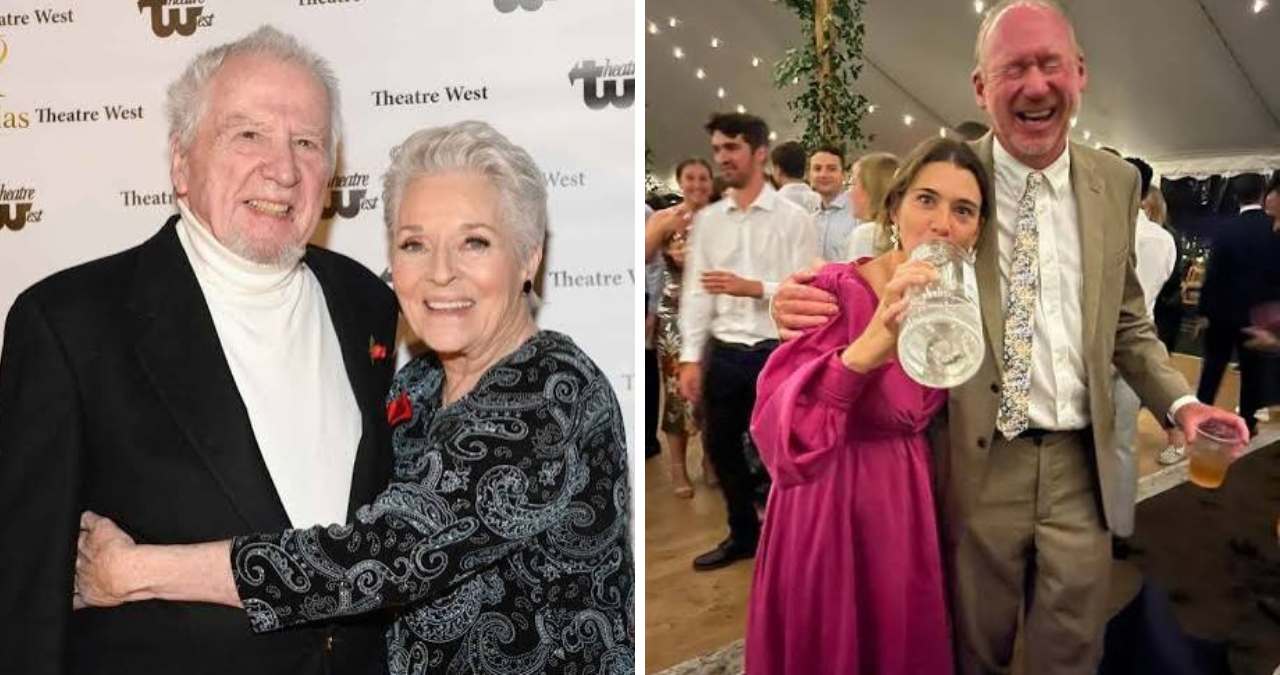
Marshall Borden was an American actor, playwright, theatre director, and educator whose career extended across stage productions, television, film, radio drama, writing, and theatre education. He became widely known to many entertainment audiences as the husband of actress Lee Meriwether, but his professional journey was built on his own long-standing connection to performance and storytelling.
Marshall Borden was born Marshall Eugene Borden on August 10, 1935, in Howell, Michigan, United States. He developed a serious interest in theatre and eventually earned academic degrees that supported his career in acting, directing, writing, and teaching. Over the years, he appeared in productions connected to television, film, regional theatre, touring shows, and radio performance.
His work included appearances in Quantum Leap, A Christmas Carol, One Life to Live, and Say It in Russian. He also worked in professional theatre and became known as a writer of original plays and stage adaptations. His marriage to Lee Meriwether became one of the most visible parts of his public story, especially because the two met through theatre and continued to perform together during their marriage.
Marshall Borden’s biography is not simply the story of a celebrity spouse. It is the story of a dedicated theatre professional who built a creative career through discipline, education, collaboration, and a continuing love for the stage.
Marshall Borden Quick Facts
| Detail | Information |
|---|---|
| Full name | Marshall Eugene Borden |
| Known as | Marshall Borden |
| Date of birth | August 10, 1935 |
| Birthplace | Howell, Michigan, United States |
| Nationality | American |
| Profession | Actor, playwright, theatre director, educator |
| Education | Eastern Michigan University and Wayne State University |
| Advanced degree | Ph.D. in Theatre |
| First wife | Carole Lee Fox |
| Second wife | Lee Meriwether |
| Marriage to Lee Meriwether | September 21, 1986 |
| Stepdaughters | Kyle Aletter and Lesley Aletter |
| Known works | Quantum Leap, A Christmas Carol, One Life to Live, Say It in Russian |
| Theatre work | Acting, writing, directing, touring productions |
| Notable play | The Artful Lodgers |
| Major adaptation | The Count of Monte Cristo |
Who Was Marshall Borden?
Marshall Borden Biography was a working actor and theatre artist whose career involved much more than performing on camera. He was part of the broad and essential world of professional theatre, where actors often take on many creative roles throughout their careers.
In addition to acting, Borden wrote plays, adapted literary works, directed stage productions, and brought academic knowledge to the theatre profession. His background made him a versatile artist. He understood performance from the actor’s perspective, but he also understood how stories are structured, how productions are created, and how audiences experience live drama.
Borden became better known to the general public through his marriage to Lee Meriwether. Lee is famous for her role as Catwoman in the 1966 Batman movie, her work as Betty Jones in Barnaby Jones, and her history as Miss America 1955. However, Marshall had already developed his own place in entertainment before their marriage.
His career shows that success in the arts is not always measured by constant celebrity coverage. Many respected professionals spend decades creating meaningful work in regional theatres, touring companies, local productions, television roles, radio dramas, and writing projects. Marshall Borden’s life reflects that kind of sustained artistic contribution.
Marshall Borden’s Early Life
Marshall Eugene Borden was born on August 10, 1935, in Howell, Michigan. Howell is located in Livingston County in southeastern Michigan. It is a community with a history connected to agriculture, small business, education, and local culture.
Information about Marshall Borden’s parents, siblings, early school life, and childhood interests has not been extensively made public. Unlike major movie stars who spend decades giving interviews, Borden maintained a more private profile. As a result, it would be inappropriate to invent details about his family background or early ambitions.
What is known is that Borden developed a lasting interest in theatre. This interest eventually led him to pursue higher education in the field and build a career based on performance, writing, and directing.
Theatre is often a demanding career choice because it requires talent, patience, discipline, and persistence. A professional theatre artist may spend years auditioning, rehearsing, traveling, memorizing scripts, learning new roles, collaborating with production crews, and performing for audiences in different cities.
Marshall Borden’s later achievements suggest that he took the craft seriously. His education and professional work reflect someone who wanted not only to perform but also to understand theatre as an art form.
Marshall Borden’s Education
Marshall Borden Biography attended Eastern Michigan University and later earned a Ph.D. in Theatre from Wayne State University. His academic journey was an important part of his identity because it gave him a deeper foundation in the performing arts.
Eastern Michigan University is located in Ypsilanti, Michigan. It has offered students opportunities to study areas such as communication, education, performance, creative arts, and theatre. Studying at the university likely gave Borden early exposure to scripts, acting methods, production work, dramatic literature, and stage performance.
He later continued his studies at Wayne State University in Detroit, Michigan. Earning a doctoral degree in theatre is a major academic achievement. A Ph.D. program requires years of research, advanced study, writing, analysis, and a detailed final dissertation or research project.
The exact subject of Borden’s doctoral work has not been publicly confirmed. However, theatre doctoral study can involve topics such as dramatic literature, theatrical history, directing theory, performance studies, stage design, actor training, educational theatre, cultural analysis, and playwrighting.
His advanced degree shows that he approached theatre as more than a job. He was committed to learning about its history, techniques, social importance, and creative possibilities.
This academic background also likely helped him succeed in different roles. An actor understands character and performance. A playwright understands story structure and dialogue. A director understands the entire stage picture. A theatre educator understands how to share knowledge and encourage others to develop their skills.
Marshall Borden’s education gave him the foundation to work across all of these areas.
Marshall Borden’s Acting Career
Marshall Borden Biography worked as an actor in theatre, television, film, and radio. His acting career may not have produced the same level of mainstream fame as that of major Hollywood stars, but he was a professional performer with credits across several formats.
His screen credits include Quantum Leap, A Christmas Carol, One Life to Live, and Say It in Russian. These projects represent different storytelling styles and demonstrate his ability to work in a range of performance settings.
Quantum Leap was a popular science-fiction television series that followed Dr. Sam Beckett, a scientist who becomes trapped in time and finds himself moving into the lives of different people. Each episode required guest actors to help create new historical settings, emotional conflicts, and individual stories.
Being part of a show such as Quantum Leap meant working in a professional television environment where scenes are filmed from multiple angles, often out of story order. Actors need to remain focused and consistent while working with directors, producers, camera crews, lighting teams, sound professionals, and other performers.
Borden also appeared in an adaptation of A Christmas Carol, Charles Dickens’ famous story about Ebenezer Scrooge and his journey toward compassion, generosity, and redemption. The story has been adapted many times for theatre, radio, film, and television. Its theatrical nature made it a fitting project for an actor with a strong stage background.
His association with One Life to Live also shows experience in daytime television. Soap operas require actors to memorize large amounts of dialogue, work at a fast production pace, and handle emotional scenes with consistency.
Say It in Russian was another part of his recorded film career. The project gave him an opportunity to appear in a more modern production and showed that his work continued across different periods of entertainment history.
Marshall Borden’s acting career was defined by variety. He did not rely on a single type of role or medium. Instead, he worked across stage, screen, and voice performance.
Marshall Borden’s Theatre Career
Theatre was at the center of Marshall Borden’s artistic life. While television and film offered him screen credits, live stage performance appears to have been the creative space where he spent much of his career.
Theatre is different from film and television because it happens live in front of an audience. There are no retakes once a performance begins. Actors must remain focused, responsive, and emotionally present from the opening moment to the final curtain.
Borden participated in regional theatre and national touring productions. Regional theatre refers to professional productions staged outside major Broadway venues. These theatres serve communities across the United States and give artists opportunities to perform serious dramatic work for audiences in many locations.
He was connected with productions such as A Little Night Music, A Song for Cyrano, Duddy, and Shine!. These productions show his involvement in musical theatre, dramatic storytelling, adaptations, and touring work.
A Little Night Music is a Stephen Sondheim musical based on themes of romance, relationships, desire, regret, and social expectations. Sondheim’s music is known for its complexity, and productions of the show require performers with strong timing, character skills, and musical understanding.
A Song for Cyrano is linked to the classic tale of Cyrano de Bergerac, a character celebrated for intelligence, courage, romance, and emotional sacrifice. The story has been adapted into numerous plays, films, and musicals because it explores universal themes of love, appearance, confidence, and identity.
Marshall Borden’s theatre work required him to travel, rehearse intensively, collaborate with fellow actors, and maintain a high level of performance over long production runs. Touring can be difficult because actors often work in a new city every week, adapt to different stages, and perform for constantly changing audiences.
His continuing commitment to theatre made him a respected member of the performing arts community.
Marshall Borden as a Playwright
Marshall Borden was also a playwright. Writing for the stage requires a different kind of creativity from acting. A playwright must imagine characters, create dialogue, develop conflict, structure scenes, and build a story that can be understood by a live audience.
One of Borden’s notable original works was The Artful Lodgers. The play became especially important in his personal life because he and Lee Meriwether were performing in it when they married in 1986.
The production reportedly included a humorous role for Borden as a 150-year-old ghost. His character wore a large moustache, a gown, and carried a cigar. Lee Meriwether played a drunken woman in the production. Their wedding took place in San Francisco while the play was being staged.
This unusual connection between a play and a wedding makes The Artful Lodgers a memorable part of Borden’s biography. It represents both his creative work as a writer and a major moment in his personal life.
Borden was also connected to work that expanded beyond original plays. He reportedly worked on turning The Artful Lodgers into a novel based on the screenplay concept. This shows his interest in adapting stories across different formats, including stage, film, and prose.
Writing can give an artist more independence. An actor performs a role written by someone else, but a playwright creates the world, dialogue, and structure from the beginning. Borden’s work as a writer allowed him to contribute to theatre not only as a performer but also as a storyteller and creator.
The Count of Monte Cristo Adaptation
One of Marshall Borden’s most notable writing achievements was his stage adaptation of Alexandre Dumas’s classic novel The Count of Monte Cristo.
The original novel is a large and complex adventure story centered on Edmond Dantès, a man who is falsely accused, imprisoned, escapes, discovers wealth, and seeks revenge against those who betrayed him. The story includes themes of injustice, loyalty, betrayal, identity, forgiveness, and moral consequence.
Adapting such a long novel for the stage is a challenging task. A book can include dozens of characters, years of time, multiple locations, internal thoughts, and complex plotlines. A stage adaptation must simplify and focus the material without losing the emotional power of the original story.
Borden’s adaptation was reportedly produced by the National Theatre of Canada in Stratford, Ontario. It ran for approximately 90 performances during the company’s 2004 season.
A 90-performance run is significant because it means the adaptation was not just a one-time reading or small experimental production. It reached audiences repeatedly and became a substantial theatre event.
Marshall Borden reportedly also developed ideas for a musical version of The Count of Monte Cristo. This shows his willingness to continue reimagining classic material and explore different storytelling forms.
His adaptation work demonstrates the depth of his literary and theatrical interests. He was capable of taking a famous nineteenth-century novel and shaping it into a story that could work on a modern stage.
Marshall Borden as a Director
Marshall Borden Biography was associated with theatre direction in addition to acting and writing. A director plays a major role in bringing a theatrical production to life.
The director studies the script, decides how the story should be interpreted, works with actors on character development, organizes movement on stage, communicates with designers, and ensures that every part of the production works together.
A director must consider lighting, costume design, music, pacing, props, scenery, transitions, and the emotional journey of the audience. It is a complex job that requires creativity, organization, communication, and confidence.
Borden’s experience as an actor likely helped him work effectively with other actors. A director who has performed understands the challenges of memorization, emotional preparation, stage anxiety, and building a believable character.
His training in theatre and his work as a playwright also gave him a broader understanding of story construction. He could evaluate a script not only as someone who needed to perform lines, but as someone responsible for shaping the entire production.
Marshall Borden’s directing work strengthened his reputation as a multi-talented theatre professional.
Meeting Lee Meriwether
Marshall Borden met actress Lee Meriwether through theatre. Their relationship began when they were working together in San Antonio in a production of Angel Street, a play also known as Gaslight.
Gaslight is a psychological thriller about a woman whose husband tries to manipulate her into questioning her own sanity. The story is famous for inspiring the modern term “gaslighting,” which describes a form of emotional manipulation intended to make someone doubt their perceptions or memory.
Performing together in a dramatic production requires trust and collaboration. Actors spend many hours rehearsing scenes, exploring motivations, improving timing, and supporting each other in emotionally difficult material.
After Angel Street, Marshall and Lee continued to work together in productions including The Lion in Winter and Alone Together. Their repeated professional collaborations gave them a chance to build a stronger relationship over time.
The Lion in Winter is a historical drama about King Henry II, Eleanor of Aquitaine, and their family conflicts. It is known for sharp dialogue, political tension, family rivalry, and emotionally demanding roles.
Alone Together is a comedy-drama about family relationships, changing values, and generational conflict. These productions allowed Marshall and Lee to explore different theatrical styles together.
Their shared work became the foundation of a relationship that would last for decades.
Marshall Borden and Lee Meriwether’s Marriage
Marshall Borden married Lee Meriwether on September 21, 1986, in San Francisco. Their wedding was unusual and memorable because it happened during the run of Borden’s play, The Artful Lodgers.
The marriage brought together two performers whose relationship had grown through theatre. Lee Meriwether was already a widely recognized actress by the time they married. She had been crowned Miss America in 1955 and later became famous for her work in television and film.
She played Catwoman in the 1966 Batman movie and appeared in the popular television series Barnaby Jones. She was also known for roles in The Time Tunnel, Mission: Impossible, The Munsters Today, and many other productions.
Despite Lee’s high-profile career, their marriage appears to have been built on shared professional interests rather than celebrity publicity. They performed together, traveled for theatre work, and supported each other’s creative projects.
After their marriage, Marshall and Lee reportedly completed four national tours of Neil Simon’s Plaza Suite. The play contains several stories set in the same hotel suite and explores marriage, family tension, romance, disappointment, and comedy.
Touring Plaza Suite together required a strong personal and professional partnership. Actors on a national tour spend long periods away from home, move between cities, work with changing theatre crews, and maintain energy through repeated performances.
Their continued work together showed that Marshall and Lee were not only partners in life but also partners in the performing arts.
Marshall Borden’s First Marriage
Before marrying Lee Meriwether, Marshall Borden Biography was married to Carole Lee Fox. Their marriage began on July 2, 1960.
Public information about this earlier marriage is limited. The available record does not provide detailed information about their relationship, divorce, children, or the circumstances that led to the end of the marriage.
Because these matters were not widely disclosed, it is important to avoid speculation. Marshall’s first marriage is part of his personal timeline, but it was not the central focus of his public career.
Later, through his marriage to Lee Meriwether, Marshall became stepfather to her two daughters, Kyle Aletter and Lesley Aletter. Both daughters have worked as actresses.
Blended families are often built through time, care, respect, and shared experiences. Marshall joined a family that already had deep connections to entertainment, but his own theatre background meant he could relate naturally to the creative environment around Lee and her daughters.
Marshall Borden’s Stepdaughters
Marshall Borden became the stepfather of Lee Meriwether’s two daughters, Kyle Aletter and Lesley Aletter. Lee had both daughters during her first marriage to actor Frank Aletter.
Kyle Aletter and Lesley Aletter grew up around entertainment because both of their parents were actors. Lee Meriwether had an established television and film career, while Frank Aletter was known for acting in theatre, television, and movies.
Marshall became part of this family after marrying Lee in 1986. Although the private details of his relationship with his stepdaughters are not widely publicized, his place in the family connected him to a multigenerational acting household.
Family connections in entertainment can create opportunities for shared understanding, but they can also create pressure. Marshall’s combination of academic training and theatre experience may have made him a supportive figure in a family where creative work was a familiar part of life.
Marshall Borden’s Television and Film Work
Marshall Borden’s television and film work provided another dimension to his professional identity. Although theatre was his main creative home, screen performances allowed him to reach broader audiences.
His listed credits include Quantum Leap, A Christmas Carol, One Life to Live, and Say It in Russian.
Quantum Leap gave Borden exposure to a popular television series known for its imaginative time-travel concept. Guest roles on a show like this require an actor to quickly understand the style of the program and contribute to a self-contained episode.
A Christmas Carol placed him within one of the world’s most enduring stories. The themes of kindness, regret, redemption, and transformation remain powerful for audiences across generations.
One Life to Live showed his ability to work in the fast-paced world of daytime drama. Soap opera production often requires actors to learn extensive dialogue quickly and perform emotionally intense scenes on a demanding schedule.
Say It in Russian was an independent film project that allowed Borden to appear in a later-career screen role. His inclusion in this production shows that he continued participating in acting work beyond the earlier stages of his career.
Marshall’s television and film appearances may have been fewer than his theatre credits, but they demonstrate his professional range. He had the ability to work in both live and recorded media.
Marshall Borden’s Radio Work
Marshall Borden also appeared in CBS Radio Mystery Theater, a radio anthology series known for suspense, mystery, supernatural storytelling, and dramatic adaptations.
Radio acting is a distinct performance skill. Unlike stage or screen acting, the audience cannot see facial expressions, costumes, physical movement, or scenery. The actor must create a character through voice, pacing, breath, emotion, and timing.
A radio performer must make the audience imagine the setting and action. A simple change in tone can suggest fear, confidence, age, physical movement, or emotional pain.
Borden’s radio work demonstrates that he could adapt to this audio-based format. His background in theatre likely helped because stage actors are trained to use their voices clearly and expressively.
Radio drama may not have the same modern visibility as film or streaming television, but it was an important storytelling medium for generations. Borden’s participation in radio performance adds another layer to his varied career.
Marshall Borden’s Working Style
Although detailed interviews about Marshall Borden’s personal working style are limited, his career suggests several qualities: versatility, discipline, curiosity, and commitment to storytelling.
He worked as an actor, playwright, director, and theatre educator. Each of these roles requires a different set of abilities, but all are connected by a strong interest in communication and dramatic expression.
His academic background shows discipline. Completing a Ph.D. in Theatre requires long-term research, reading, writing, and analytical work.
His acting career shows adaptability. He performed in theatre, film, television, and radio, each of which requires different techniques.
His playwriting shows imagination. Writing an original play means creating characters and conflicts from nothing, then turning those ideas into scenes that actors can perform.
His adaptation of The Count of Monte Cristo shows intellectual ambition. Taking a long and complex classic novel and transforming it for stage audiences requires confidence, structure, and literary understanding.
Finally, his long marriage and professional collaboration with Lee Meriwether suggest an ability to share creative space with another performer. Theatre is never a solitary art form. It depends on trust, cooperation, and the ability to work with others toward a common goal.
Marshall Borden’s Legacy
Marshall Borden’s legacy belongs to the world of working theatre artists. He may not have achieved the same level of worldwide fame as major movie stars, but he contributed to the arts through performance, writing, directing, education, and collaboration.
His career reminds audiences that theatre depends on thousands of committed professionals who may not become household names but whose work shapes local communities, touring productions, educational programs, and artistic traditions.
Borden’s legacy includes his acting roles in television and film, his original play The Artful Lodgers, his adaptation of The Count of Monte Cristo, his national theatre work, and his academic commitment to theatre.
His marriage to Lee Meriwether also forms part of his public legacy. Their relationship began on stage, continued through repeated productions, and lasted through years of theatre tours and shared professional activity.
Theatre is often temporary in a way that film is not. A movie can be watched decades later, but a stage performance exists only in the moment it is performed. Its impact lives in the memories of audiences, actors, directors, crew members, and communities.
Marshall Borden spent much of his life contributing to that living art form. His work helped bring stories to audiences in real time, and that remains an important achievement.
Frequently Asked Questions
Who was Marshall Borden Biography?
Marshall Borden was an American actor, playwright, theatre director, and educator. He was also known as the husband of actress Lee Meriwether.
What was Marshall Borden’s full name?
His full name was Marshall Eugene Borden.
When was Marshall Borden born?
Marshall Borden was born on August 10, 1935, in Howell, Michigan, United States.
What was Marshall Borden known for?
He was known for acting in projects including Quantum Leap, A Christmas Carol, One Life to Live, and Say It in Russian. He was also a playwright and theatre professional.
Was Marshall Borden married to Lee Meriwether?
Yes. Marshall Borden married Lee Meriwether on September 21, 1986, in San Francisco.
Conclusion
Marshall Borden was a talented theatre professional whose career covered acting, writing, directing, education, television, film, and radio. Born in Howell, Michigan, he turned a deep interest in performance into a lifelong creative journey.
His academic achievements, including a Ph.D. in Theatre, reflected his serious commitment to the art form. His professional work showed similar versatility, with performances in stage productions, television shows, films, and radio drama.
Borden’s writing added another important chapter to his legacy. Through The Artful Lodgers and his adaptation of The Count of Monte Cristo, he demonstrated the ability to create and reshape stories for live audiences.
His marriage to Lee Meriwether was also a major part of his life. The pair met in theatre, worked together in several productions, married while appearing in one of Borden’s plays, and continued to tour as professional performers.
Marshall Borden’s life proves that meaningful success in the arts is not limited to celebrity fame. His lasting contribution came through the stories he performed, wrote, directed, and shared with audiences throughout his career.