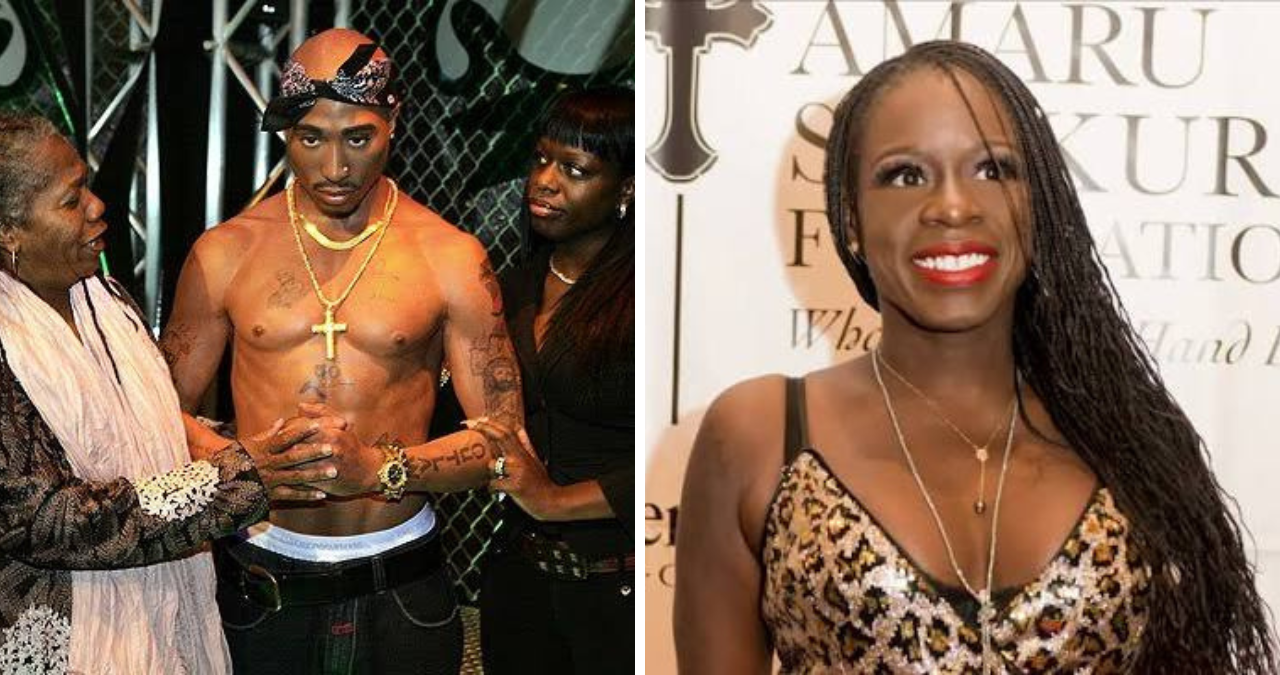
Sekyiwa “Set” Shakur is an American philanthropist, advocate, nonprofit leader, and the younger half-sister of legendary rapper Tupac Shakur. While millions of people recognize her through Tupac’s global influence, Sekyiwa has created her own identity through community service, mental-health advocacy, youth development, philanthropy, and work dedicated to protecting her family’s legacy.
She serves as president of the Tupac Amaru Shakur Foundation, a nonprofit organization established by her mother, Afeni Shakur, in 1997. The foundation focuses on helping communities address trauma, supporting mental-health awareness, and creating educational and creative opportunities for young people.
Sekyiwa Shakur’s life has been shaped by activism, grief, resilience, and service. She grew up in a family connected to Black liberation movements, experienced the loss of her famous brother at a young age, and later faced the loss of her mother. Rather than allowing tragedy to define her, she has focused on healing, community empowerment, and carrying forward the values that Tupac and Afeni Shakur represented.
Sekyiwa Shakur Quick Facts
| Detail | Information |
|---|---|
| Full name | Sekyiwa Shakur |
| Nickname | Set Shakur |
| Nationality | American |
| Birthplace | East Harlem, New York City, United States |
| Date of birth | Commonly reported as October 3, 1975 |
| Mother | Afeni Shakur |
| Father | Mutulu Shakur |
| Famous sibling | Tupac Amaru Shakur |
| Profession | Philanthropist, advocate, nonprofit leader |
| Organization | Tupac Amaru Shakur Foundation |
| Role | President and acting CEO |
| Major causes | Mental health, trauma healing, youth development, creative arts, social justice |
Who Is Sekyiwa Shakur?
Sekyiwa Shakur is the only sibling of Tupac Shakur, the iconic rapper, poet, actor, and social commentator whose influence continues decades after his death. Tupac became famous for music that explored poverty, racism, violence, police brutality, motherhood, family struggle, Black pride, and the realities of life in underserved communities.
Sekyiwa knew Tupac not as an international celebrity but as her older brother. Their connection was rooted in family life, shared hardship, and the influence of their mother, Afeni Shakur.
After Tupac’s death in 1996, Sekyiwa became increasingly involved in preserving the family’s values and legacy. She has helped transform Tupac’s name from a symbol of music history into a continuing mission centered on healing, youth opportunity, creative expression, and mental-health support.
Her leadership through the Tupac Amaru Shakur Foundation is one of the most important parts of her biography. The organization works to help communities confront trauma and create better opportunities for young people.
Early Life and Childhood
Sekyiwa Shakur was born in East Harlem, New York City. She grew up in a family shaped by social activism, Black political thought, economic struggle, artistic expression, and community organizing.
Her mother, Afeni Shakur, was a former member of the Black Panther Party. Afeni was known for her intelligence, courage, political commitment, and resilience. Before Tupac’s birth, she was involved in the Panther 21 case, in which members of the Black Panther Party were accused of plotting attacks in New York. Afeni defended herself in court while pregnant with Tupac and was acquitted.
Sekyiwa’s father, Mutulu Shakur, was also associated with Black liberation activism. He was involved in community health initiatives and political organizing, particularly around health services and the rights of Black communities.
Growing up in such a family meant that Sekyiwa was exposed to discussions about race, inequality, justice, history, poverty, and resistance from an early age. These were not just political ideas for the Shakur family. They were connected to everyday life, personal experiences, and the challenges faced by Black Americans.
Sekyiwa and Tupac experienced periods of instability while growing up. The family moved between locations in New York, including Harlem and the Bronx, and faced financial hardship. Like many families living under economic pressure, they dealt with housing insecurity and uncertain circumstances.
Despite these struggles, Afeni encouraged her children to think independently, read widely, value creativity, and understand the history of Black people in America. Her influence was visible in Tupac’s poetry, music, interviews, and political awareness. It was also visible in Sekyiwa’s later commitment to education, youth development, and community service.
Growing Up With Tupac Shakur
Tupac Shakur was Sekyiwa’s older half-brother. They shared the same mother, Afeni Shakur, but had different fathers. Tupac was born in 1971, while Sekyiwa was born several years later.
To the public, Tupac became a hip-hop icon. To Sekyiwa, he was family. She grew up with him during the years before his global fame, before major record deals, film roles, controversies, and public attention.
Their childhood relationship was shaped by their family’s environment. They experienced the same social pressures, economic challenges, and political education. Tupac’s later lyrics reflected many of the realities they knew personally: poverty, unstable housing, addiction, racism, loss, emotional pain, and hope for a better future.
Tupac was known for being expressive and emotionally open in his art. He wrote about his mother in “Dear Mama,” addressed the struggles of women in “Keep Ya Head Up,” and highlighted the effects of poverty in songs such as “Brenda’s Got a Baby.”
For Sekyiwa, these themes were not only part of Tupac’s public music. They were connected to their shared family history.
As Tupac’s success grew, the family had to adjust to the pressures of fame. His career brought financial opportunities and recognition, but it also brought legal troubles, media scrutiny, industry conflict, and increasing danger.
Sekyiwa watched her brother become one of the most famous rappers in the world while remaining connected to the family experiences that shaped him.
The Impact of Afeni Shakur
Afeni Shakur had a powerful influence on Sekyiwa’s life. She was not only a mother but also a teacher, activist, mentor, and later the guardian of Tupac’s legacy.
Afeni taught her children about social responsibility and the importance of understanding the world around them. Her experience in the Black Panther Party gave the family a strong political foundation.
After Tupac’s death, Afeni took charge of protecting his estate, music, artistic work, and public image. She worked to ensure that Tupac’s unfinished music and personal legacy were handled in a way that honored his values.
Afeni also created the Tupac Amaru Shakur Foundation in 1997. The organization was designed to support youth through arts education, cultural development, and community opportunity.
Over time, the foundation expanded its focus to include mental health, trauma recovery, wellness, and community healing. This shift reflects the understanding that young people need more than talent programs or academic support. They also need safe spaces, emotional care, mentorship, and resources that address the effects of trauma.
Afeni died in 2016. Her death was a profound loss for Sekyiwa, who had already lost her brother two decades earlier. After Afeni’s passing, Sekyiwa took on a more visible leadership role in protecting the family’s legacy and continuing the foundation’s mission.
Sekyiwa Shakur’s Education
Sekyiwa Shakur Biography was described as a strong student who graduated from high school early and near the top of her class. She later attended Clark Atlanta University.
Her educational path reflects a commitment to self-improvement despite the challenges she faced growing up. Education was especially important in a family that valued political awareness, cultural knowledge, and personal responsibility.
While attending college, Sekyiwa volunteered at the Phyllis Wheatley YMCA. This early volunteer work showed her interest in helping young people and working within community-based programs.
She later became a program coordinator for Teens On The Rise, an initiative focused on HIV prevention and teen pregnancy prevention. This role gave her practical experience in youth outreach, health education, communication, and nonprofit programming.
Working with young people on health-related issues requires more than knowledge. It requires empathy, trust, cultural understanding, patience, and the ability to communicate without judgment.
Sekyiwa’s experience in this work became part of the foundation for her later leadership. Long before she became publicly known as a foundation president, she had already developed a background in direct service and youth advocacy.
Becoming a Young Mother
Sekyiwa Shakur has spoken about becoming a mother at a young age. She had two children while still young and faced the challenge of balancing parenting responsibilities with education, employment, and personal growth.
Young parenthood can create major challenges. A person may need to manage childcare, school, finances, housing, work, emotional wellbeing, and family expectations at the same time. For many young parents, access to supportive community programs can be the difference between feeling overwhelmed and finding a stable path forward.
Sekyiwa’s own life experience likely strengthened her commitment to programs that support young people. She understands that teenagers and young adults may be dealing with adult responsibilities while still trying to discover their own identities.
Her story offers a message of resilience. Early hardship does not mean a person cannot build a meaningful future. With support, determination, education, and emotional care, people can move forward and create positive change.
Mental Health and Personal Healing
Mental health is central to Sekyiwa Shakur’s advocacy. She has spoken openly about her experiences with social anxiety, depression, suicidal thoughts, and hospitalization.
Her honesty is important because mental-health struggles are often hidden by shame, fear, or social stigma. Many people feel pressure to appear strong, especially when they are part of families or communities that have experienced trauma.
Sekyiwa’s willingness to discuss mental health makes her advocacy personal and credible. She does not talk about healing only as a theory. She understands the need for support, safe spaces, professional care, and honest conversation.
Her public work recognizes that trauma can be passed through families and communities. Poverty, violence, racism, incarceration, loss, unstable housing, addiction, and discrimination can all affect mental health.
The Tupac Amaru Shakur Foundation focuses on addressing mental-health conditions and reducing the effects of trauma in the community. Its approach combines therapeutic support, education, creative arts, and community engagement.
This is important because healing does not always happen in one setting. Some people need clinical mental-health care. Others may need mentorship, food assistance, housing support, artistic outlets, peer groups, or opportunities to feel heard and valued.
Sekyiwa’s advocacy helps connect these needs. She supports the idea that mental wellness is linked to dignity, opportunity, safety, and community.
Tupac Amaru Shakur Foundation
The Tupac Amaru Shakur Foundation was founded by Afeni Shakur in 1997, one year after Tupac’s death. The foundation was created to preserve Tupac’s legacy while helping young people develop their potential through creativity, education, and community support.
The organization was originally associated with arts education and youth programming. One major project connected to the foundation was the Tupac Amaru Shakur Center for the Arts in Stone Mountain, Georgia.
Over time, the organization’s mission expanded. It now focuses strongly on mental health, trauma recovery, education, therapeutic resources, and creative arts.
The foundation sees art as a way to help people heal. Music, writing, painting, dance, poetry, theatre, and performance can provide healthy ways to process difficult emotions and experiences.
This philosophy strongly connects to Tupac’s artistic legacy. Tupac used music and poetry to express grief, anger, love, pain, fear, hope, and social criticism. The foundation continues that spirit by encouraging young people to find their voices and tell their stories.
Sekyiwa Shakur has played a central role in carrying the foundation forward. She has worked as a student liaison, program coordinator, board member, president, and acting chief executive officer.
Her leadership helps ensure that the organization remains connected to real community needs rather than becoming only a memorial to a famous musician.
Sekyiwa Shakur as Foundation President
As president and acting CEO of the Tupac Amaru Shakur Foundation, Sekyiwa Shakur is responsible for guiding the organization’s direction and representing its mission publicly.
Leading a nonprofit requires much more than passion. It involves fundraising, partnerships, program planning, financial oversight, communication, community trust, legal compliance, and long-term strategy.
Sekyiwa brings personal experience to her leadership. She understands family trauma, public grief, mental-health challenges, youth development, and the responsibility of protecting a well-known legacy.
Her leadership style is often described as heart-centered. This does not mean avoiding difficult decisions. Instead, it means placing people, healing, and community needs at the center of the foundation’s work.
The organization’s focus on trauma is especially meaningful because trauma affects many communities in ways that are often ignored. A young person may struggle in school not because they lack ability, but because they are dealing with grief, violence, homelessness, anxiety, family instability, or untreated depression.
The foundation seeks to create support systems that recognize these realities. In doing so, Sekyiwa continues the family’s belief that real empowerment requires both opportunity and healing.
Community Service and Outreach
Sekyiwa Shakur Biography has been involved in a variety of community-support efforts. Her work includes youth advocacy, mental-health awareness, humanitarian outreach, human-rights advocacy, and support for people affected by trauma.
In 2021, the Tupac Amaru Shakur Foundation participated in a community feeding initiative in New Orleans after Hurricane Ida. The effort focused on helping people affected by the storm and reflected the organization’s belief in direct service.
Food distribution may seem simple, but it can be critical after a disaster. Families can lose electricity, transportation, income, homes, access to stores, and the ability to prepare meals. Community organizations often become important sources of immediate relief.
Sekyiwa’s involvement in such work reflects a practical understanding of philanthropy. Helping communities is not only about speeches, publicity campaigns, or symbolic events. It also means providing food, support, resources, and care when people need them most.
Her advocacy has also been linked to prison rights, peace, expanded access to mental-health services, and efforts to combat human trafficking.
These causes reflect the Shakur family’s historical connection to activism. Afeni Shakur’s Black Panther background and Mutulu Shakur’s political organizing influenced the family’s understanding of justice and community responsibility.
Tupac Shakur’s Death
Tupac Shakur was shot in Las Vegas on September 7, 1996, after attending a boxing match. He died six days later on September 13, 1996, at the age of 25.
His death shocked the music industry and deeply affected his family, friends, and fans. Tupac had become one of the most influential artists of his generation, and his killing created questions that remained unresolved for decades.
For Sekyiwa, the loss was intensely personal. Tupac was her brother, and his death changed her family forever.
Losing a sibling to violence can affect every part of life. It can create grief, anger, fear, uncertainty, and long-term trauma. When the person is famous, family members also face public speculation, documentaries, books, rumors, conspiracy theories, and commercial use of their loved one’s image.
Sekyiwa has had to navigate all of these pressures while carrying the private pain of losing her brother.
Her foundation work can be understood partly as a response to this loss. By helping young people access creative opportunities and trauma support, she works to create hope from a family tragedy.
The Arrest in Tupac’s Case
In 2023, Duane “Keffe D” Davis was arrested and charged in connection with Tupac Shakur’s killing. The arrest was a major development because the case had remained unsolved for nearly three decades.
Sekyiwa Shakur responded with caution. She made it clear that the family wanted facts and due process rather than speculation.
This response reflected the complicated nature of justice after so much time. An arrest may represent progress, but it cannot erase the trauma of a death or restore a lost family member.
Sekyiwa has also spoken about the family’s lack of full trust in the justice system. Her perspective is shaped by the history of Black Americans, the political experiences of her parents, and the long delay in Tupac’s case.
Her position is not only about Tupac. It reflects a broader concern about how justice systems treat Black families, Black victims, and communities affected by violence.
Legal Disputes Over the Estate
After Afeni Shakur died in 2016, legal disputes emerged over the management of her estate and interests connected to Tupac’s legacy.
Sekyiwa Shakur and the Tupac Amaru Shakur Foundation filed claims in 2022 against Tom Whalley, who had been involved in managing Afeni Shakur’s estate and Tupac-related business interests.
The lawsuit included allegations of financial misconduct and claims that Whalley had violated his responsibilities as trustee and executor. Whalley disputed the claims and maintained that he had been selected by Afeni Shakur to oversee the relevant business interests.
These matters involve legal allegations and should not be presented as proven facts unless resolved by a court. However, the dispute demonstrates the challenges involved in managing the estate of a major cultural figure.
Tupac’s legacy includes music rights, unreleased recordings, personal property, trademarks, licensing opportunities, film-related materials, archives, and cultural artifacts. Decisions about these matters can involve both major financial questions and personal family concerns.
Sekyiwa’s involvement in the legal dispute reflects her determination to protect her mother’s wishes and her brother’s legacy.
Protecting Tupac’s Legacy
Tupac Shakur’s influence remains enormous. His music is still streamed by millions of listeners, his lyrics are quoted in popular culture, and his image appears in documentaries, museum exhibits, fashion, books, social media, and commercial products.
However, popularity can create problems. A famous person’s legacy may become simplified, commercialized, or separated from the values they represented.
Sekyiwa Shakur has worked to preserve the deeper meaning of Tupac’s life and art. For her, Tupac was not only a rapper. He was a brother, son, poet, actor, thinker, and person who cared deeply about injustice.
His songs often addressed social conditions that remain relevant today. He spoke about poverty, racism, violence, women’s rights, police abuse, family struggle, and the need for hope.
The Tupac Amaru Shakur Foundation keeps those themes connected to real action. By supporting mental health, healing, creative arts, and youth development, the organization turns Tupac’s legacy into a living mission.
Sekyiwa’s work helps prevent his name from becoming only a commercial symbol. It reminds people that the most meaningful way to honor Tupac is to support the communities he wrote about.
Hollywood Walk of Fame Honor
In 2023, Tupac Shakur received a posthumous star on the Hollywood Walk of Fame. Sekyiwa Shakur accepted the honor on behalf of the family.
The event was emotionally significant because it recognized Tupac’s lasting contribution to music and culture. His career was short, but his influence remains powerful.
During such public moments, Sekyiwa represents the family’s voice. She helps audiences remember Tupac as more than an image from the past. She speaks about him as a real person whose work continues to inspire people around the world.
The Walk of Fame honor also reflected the changing perception of hip-hop. Tupac’s music was once viewed by some people only through controversy. Today, he is widely recognized as one of the most important artists in the history of the genre.
Sekyiwa’s presence at the ceremony showed the continuing connection between Tupac’s legacy and the family that knew him best.
Sekyiwa Shakur’s Public Image
Sekyiwa Shakur Biography is known for being thoughtful, private, and deeply committed to her family’s legacy. She does not seek attention in the same way as many people connected to celebrity culture.
Her public appearances usually relate to nonprofit work, Tupac’s legacy, mental-health advocacy, justice issues, or family events.
She has spoken honestly about personal struggles, but she has not turned those experiences into sensational entertainment. Her approach is focused on helping others, encouraging dialogue, and creating practical support for communities.
This quiet but determined public image has helped establish her as a respected figure among people who value Tupac’s message.
She represents a different side of celebrity legacy: the family member who works to keep the message alive through service rather than publicity.
Sekyiwa Shakur’s Legacy
Sekyiwa Shakur’s legacy is still evolving. She is known around the world as Tupac Shakur’s sister, but she has become much more than a relative of a famous artist.
She has turned personal loss into a mission of healing. She has used her experiences with grief, mental health, family hardship, and young motherhood to connect with people facing similar struggles.
Through the Tupac Amaru Shakur Foundation, she supports a vision of community care that combines creative expression, youth development, mental-health awareness, education, and trauma recovery.
Sekyiwa Shakur’s work reminds people that Tupac’s legacy is not only about music. It is also about social justice, empathy, family, community, and the need to help people who are struggling.
Her biography is ultimately a story of strength. She grew up in a politically conscious family, endured major loss, faced personal challenges, and became a leader committed to helping others heal.
Frequently Asked Questions
Who is Sekyiwa Shakur Biography?
Sekyiwa “Set” Shakur is Tupac Shakur’s younger half-sister. She is a philanthropist, advocate, and president of the Tupac Amaru Shakur Foundation.
Is Sekyiwa Shakur Tupac’s real sister?
Yes. Sekyiwa and Tupac shared the same mother, Afeni Shakur. They had different fathers, making them half-siblings.
Who are Sekyiwa Shakur’s parents?
Her mother was Afeni Shakur, a former Black Panther Party member and founder of the Tupac Amaru Shakur Foundation. Her father was Mutulu Shakur, an activist and community organizer.
What does Sekyiwa Shakur do?
Sekyiwa Shakur leads the Tupac Amaru Shakur Foundation and advocates for mental-health awareness, trauma recovery, youth development, creative arts, education, and social justice.
What is the Tupac Amaru Shakur Foundation?
It is a nonprofit created by Afeni Shakur in 1997 to support youth, creative arts, education, trauma healing, and mental-health resources in the community.
Does Sekyiwa Shakur have children?
Sekyiwa Shakur has spoken about becoming a mother at a young age and having two children. She keeps their names and personal lives private.
Why is Sekyiwa Shakur important?
She is important because she helps protect Tupac Shakur’s legacy while leading charitable programs that support mental health, healing, young people, and underserved communities.
What happened to Tupac Shakur?
Tupac Shakur was shot in Las Vegas in September 1996 and died six days later at the age of 25.
Why did Sekyiwa Shakur file a lawsuit over Tupac’s estate?
Sekyiwa and the Tupac Amaru Shakur Foundation filed legal claims related to the management of Afeni Shakur’s estate and assets connected to Tupac’s legacy. The legal claims included allegations of misconduct that were disputed.
Conclusion
Sekyiwa “Set” Shakur has built a meaningful identity as an advocate, nonprofit leader, mother, and guardian of her family’s cultural legacy. Although she is widely recognized as Tupac Shakur’s younger sister, her work through the Tupac Amaru Shakur Foundation shows that her contribution reaches far beyond preserving the memory of a famous artist.
Guided by the values of her mother, Afeni Shakur, Sekyiwa has focused on mental-health awareness, trauma recovery, creative arts, youth development, and community support. Her willingness to speak about grief, depression, anxiety, and personal hardship has also given her advocacy a deeply human dimension.
Through her leadership, Tupac’s legacy continues as more than music and celebrity history. It becomes a living commitment to healing, opportunity, justice, and hope for people facing trauma and inequality.